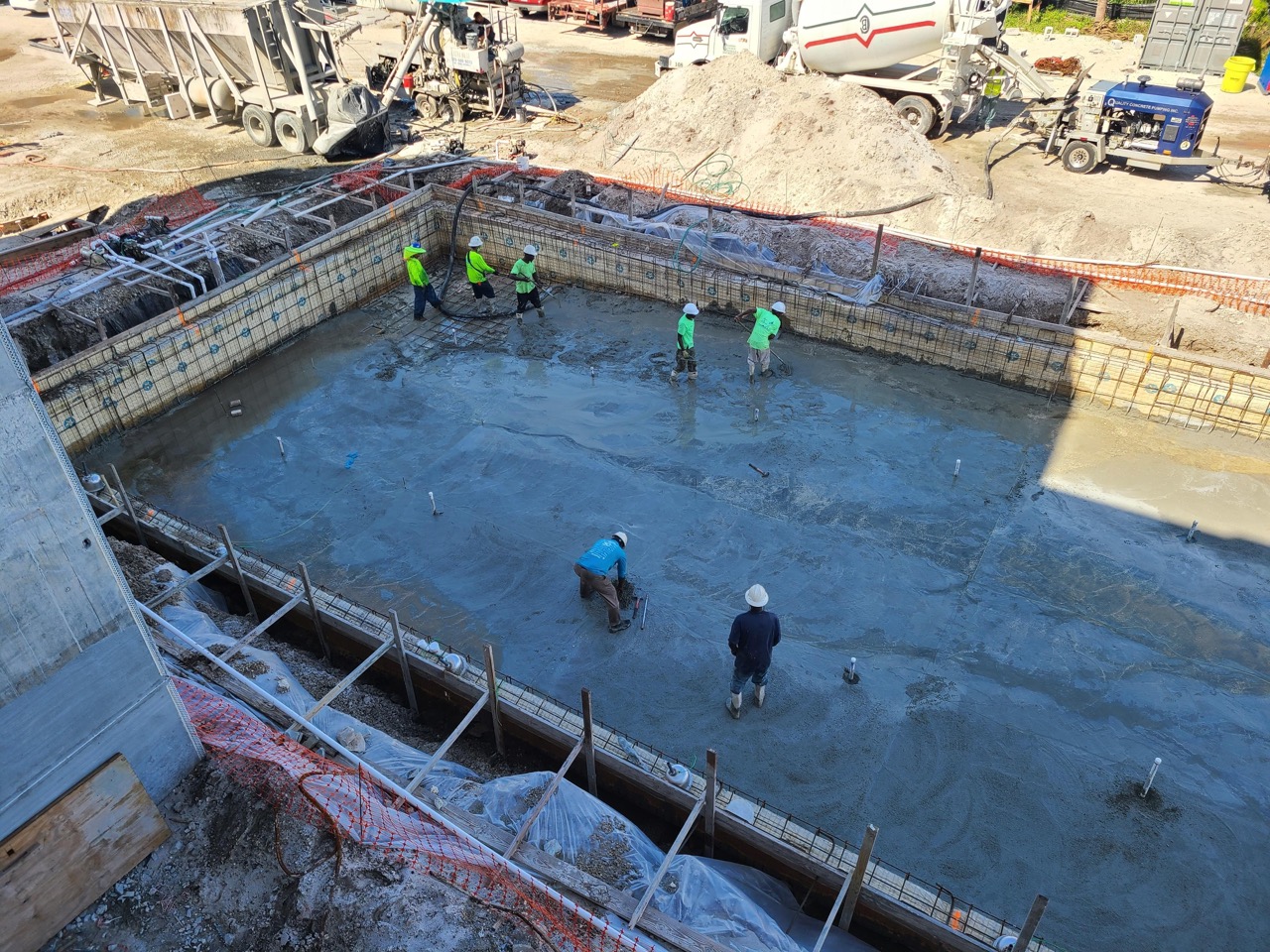
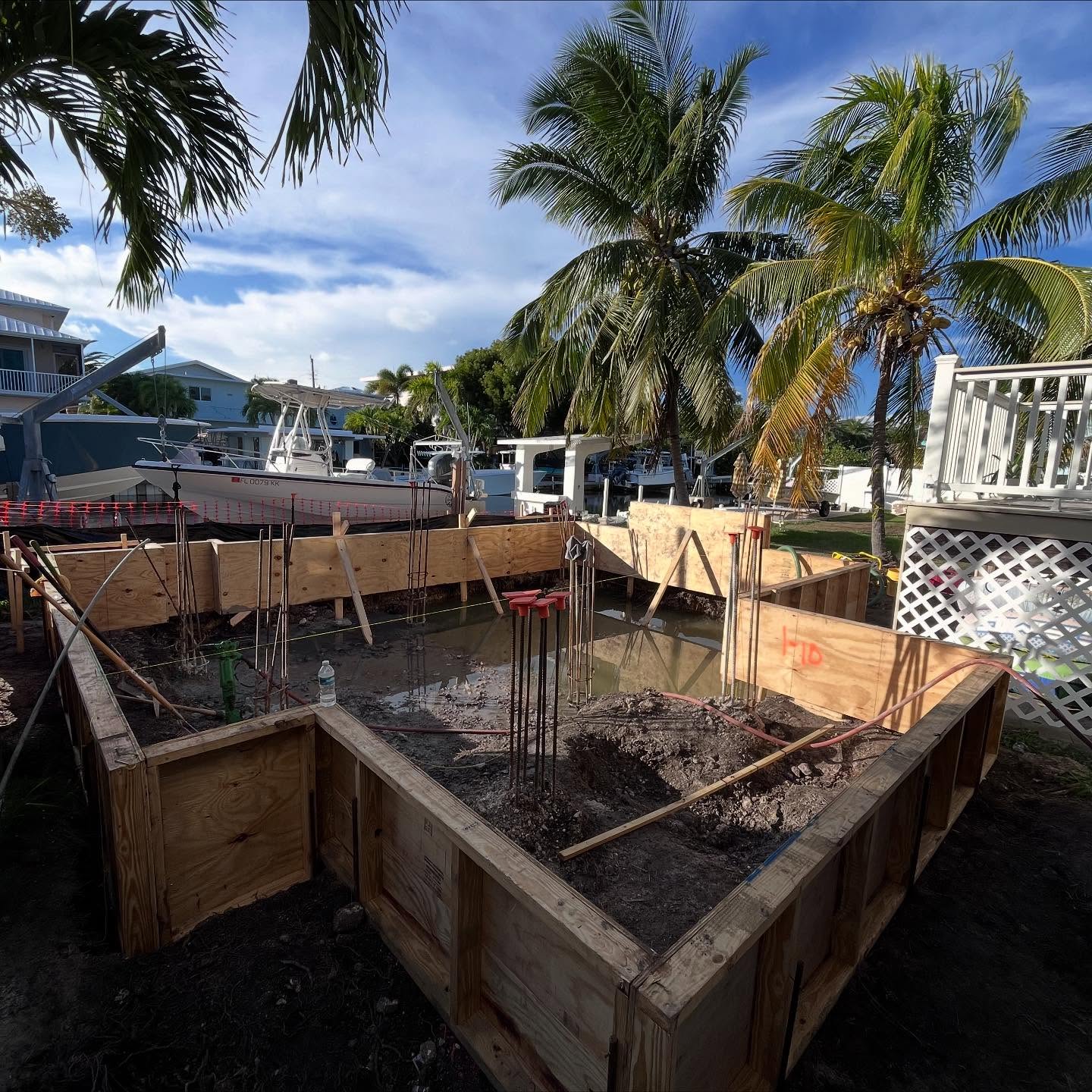
Choosing a commercial contractor in South Florida is one of the most consequential decisions in any development or renovation project — and one of the most underestimated. The contractor you hire doesn't just build the physical space. They manage your permitting timeline, coordinate every licensed trade on the job, and are accountable for the quality and code compliance of everything that goes into the building.
South Florida's commercial construction market has no shortage of contractors willing to give you a number. What's harder to find is a contractor who has the licensing, track record, and local knowledge to actually deliver — on time, on budget, and without the surprise change orders and inspection failures that define too many South Florida commercial projects.
Here's exactly what to evaluate before you sign a commercial construction contract in South Florida.
Warbird Construction is a licensed general contractor (CGC1524919) delivering commercial construction throughout South Florida — Broward County, Miami-Dade County, and the Florida Keys. The checklist below reflects what we'd want any client to verify before hiring any contractor, including us.
Work through this list before signing anything. Each item reflects a real risk in the South Florida commercial construction market — not a theoretical one.
In Florida, anyone performing commercial construction work above a defined threshold must hold an active Florida Certified General Contractor license (CGC) or Florida Registered General Contractor license. Verify license status before you invest any time in the relationship.
HOW TO VERIFY
✔ License is Active with no disciplinary history
✔ License holder name matches the contracting entity
✖ Contractor cannot provide a license number upfront
✖ License is expired, inactive, or under complaint
Commercial permitting in South Florida varies significantly by municipality. A contractor with deep experience in Fort Lauderdale is not automatically equipped for the Coral Gables design review process or Miami Beach's coastal construction requirements. A contractor who regularly works in Miami-Dade's ePlan system navigates commercial permit applications differently — and faster — than one doing it for the first time.
Ask directly: How many commercial permits have you pulled in this municipality in the last two years? Who on your team manages the permit application and tracks review status? What's your process when a reviewer issues comments?
✔ Contractor has active permit history in your specific city or county
✔ Has an internal process for tracking review status and responding to comments
✔ Pulls all permits in their own license — never asks the owner to pull
✖ Cannot name any projects recently permitted in your municipality
✖ Suggests you pull the permit as owner-builder to save money
The best predictor of performance on your project is performance on similar projects. Ask for a list of commercial projects completed in the last three years — similar scope, similar building type, similar municipality. Then follow up.
A contractor's portfolio page is a starting point, not a reference check. Call the project owners or facilities managers listed. Ask whether the project came in on schedule, whether change orders were managed transparently, and whether they'd hire the contractor again.
✔ Can provide 2–3 comparable commercial projects with owner contacts
✔ Project references confirm on-schedule delivery and transparent communication
✔ Portfolio includes projects in your building type (office, retail, institutional, etc.)
✖ References are vague or cannot be independently verified
✖ No completed commercial projects in the last 24 months
A lump-sum commercial bid is a contract designed to benefit the contractor, not you. When a bid lists one number for the entire scope, you have no way to compare proposals, no visibility into where the money is going, and no baseline for evaluating change orders when they come — and they will come.
A legitimate commercial contractor will provide a line-item bid breaking out at minimum: site work and preparation, structural and framing, exterior shell, MEP rough-in, MEP equipment, interior build-out, finishes, permitting fees, and general conditions. Each line should have a quantity, unit cost, and total.
✔ Bid is line-item with separate costs for each major scope
✔ Permitting fees, inspections, and general conditions are listed separately
✔ Allowances are clearly identified and defined
✖ Bid is a single lump sum with no breakdown
✖ Contractor refuses to provide itemization or says it's 'not how we work'
In South Florida's tight labor market, who a general contractor uses for electrical, plumbing, mechanical, and specialty work matters as much as the GC's own license. Unlicensed electrical or plumbing work on a commercial project will fail inspection, trigger stop-work orders, and create significant liability — even if your GC is fully licensed.
Ask for a list of the major subcontractors the contractor plans to use on your project. Verify that the electrical, plumbing, and mechanical subcontractors hold active Florida licenses. Ask whether they use the same subcontractors consistently or put subcontracts out to bid for each project — consistency typically means established working relationships and smoother coordination.
✔ Can name licensed MEP subcontractors and confirm their license status
✔ Uses consistent subcontractor relationships — not lowest-bid strangers
✔ GC takes responsibility for all subcontractor work under their contract
✖ Cannot name the electrical or plumbing subcontractor at bid time
✖ Suggests you hire trades directly to 'save on markup'
Florida's Construction Lien Law regulates payment schedules on construction contracts and provides specific protections for both owners and contractors. Commercial payment schedules should be tied to documented project milestones — not arbitrary dates or percentages.
Be wary of any commercial contractor requesting more than 10–15% upfront before mobilization. A deposit is reasonable; a front-loaded payment schedule that gives the contractor significant cash before substantial work is complete is not.
✔ Payment schedule tied to defined project milestones
✔ Retainage (typically 10%) held through project completion
✔ Final payment tied to CO issuance, not just punch list completion
✖ Large upfront payment (25%+) required before work begins
✖ Payment schedule front-loaded with no retainage
Beyond the universal checklist above, commercial construction in South Florida has specific requirements that narrow the field of contractors who can actually execute.
Florida Building Code requirements for wind load and impact resistance are among the most stringent in the country. A commercial contractor in South Florida must design and build to High-Velocity Hurricane Zone (HVHZ) standards in Miami-Dade and Broward Counties — which includes specific requirements for windows, doors, roofing systems, and structural connections. Verify that your contractor understands HVHZ requirements and builds to them as standard, not as an add-on.
If your portfolio includes commercial properties across Broward County, Miami-Dade County, and Monroe County, a contractor who has permitted and built in all three jurisdictions reduces complexity significantly. Each county runs its own permitting process, maintains its own inspector relationships, and has its own code interpretations. A contractor who knows all three is an asset that's harder to find than it sounds.
South Florida commercial projects take longer than the national average — primarily due to permitting. A contractor who promises a timeline without accounting for the actual permitting window in your specific municipality is either inexperienced or optimizing for getting you to sign. Ask for a schedule that shows permitting duration separately from construction duration, and verify that the permitting estimate is based on real recent experience in your location.
Use this checklist before you issue an RFP, before you accept a bid, and before you sign a construction contract. The contractors who pass it aren't always the ones who come in lowest — but they're the ones whose projects get built on time, permitted without delays, and closed without litigation.
Warbird Construction is available for pre-construction consultations on commercial projects throughout South Florida. We'll walk you through what your specific project requires — permitting, timeline, scope, and budget — before you commit to anything.
Schedule a Commercial Project Consultation
How do I verify a commercial contractor's license in Florida?
Go to myfloridalicense.com and select License Verification. Search by the contractor's name or CGC license number. Confirm the license is Active with no disciplinary history, that the license holder matches the entity you're contracting with, and that the license type (General Contractor — CGC) covers commercial construction. This takes two minutes and should happen before any substantive conversation with a contractor.
What should a commercial construction bid include?
A commercial construction bid should be line-item, not a lump sum. At minimum it should break out site work, structural and framing, exterior shell, MEP rough-in, MEP equipment, interior build-out, finishes, permitting fees and inspections, and general conditions. Each line should show quantity, unit cost, and total. Allowances (items where final cost isn't known) should be clearly identified. A contractor who won't provide a line-item breakdown is structuring the bid to protect themselves, not you.
How long does commercial construction take in South Florida?
Tenant improvements in existing commercial space typically run 4–8 months total, with 6–14 weeks for permitting and 8–20 weeks for construction. Ground-up commercial construction runs 18–26 months from project kickoff to certificate of occupancy, with permitting alone taking 4–8 months in most Broward County municipalities. Our South Florida construction timelines guide breaks this down by project type and county.
What is a Florida Certified General Contractor (CGC)?
A Florida Certified General Contractor (CGC) holds a state-issued license that is valid throughout Florida for commercial and residential construction. It is distinct from a Registered General Contractor, whose license is limited to one or more specific counties. For commercial construction in South Florida, verify that your contractor holds an active CGC — not just a county-specific registration. Warbird Construction holds CGC1524919.
Should I get multiple bids for a commercial construction project in South Florida?
Yes — for projects of significant scope. Two to three bids from licensed, qualified contractors gives you a basis for comparison. When evaluating bids, compare line by line, not just the total. A lower total bid often reflects scope omissions, lower-quality materials specified, or a less experienced subcontractor base — all of which show up as change orders after work begins. The lowest bid is rarely the lowest final cost.
Does Warbird Construction handle commercial projects in Broward County and Miami-Dade?
Yes. Warbird Construction delivers commercial construction throughout South Florida — Broward County, Miami-Dade County, and Monroe County. Our commercial project experience includes office buildings, municipal facilities, institutional construction, tenant improvements, and commercial renovations across all three counties.
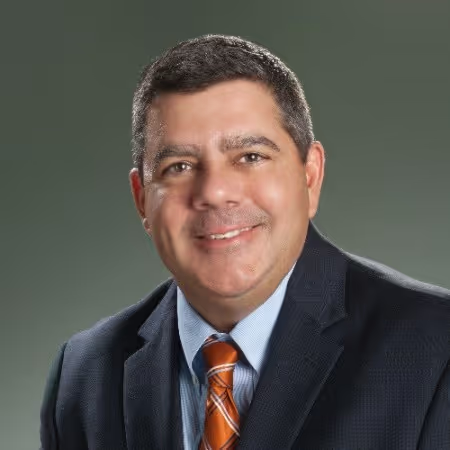
Eric Squilla is a licensed Florida General Contractor with 30+ years of experience building across South Florida. As founder of Warbird Construction, he brings hands-on leadership to every project. Have a project in mind? Let’s talk.